
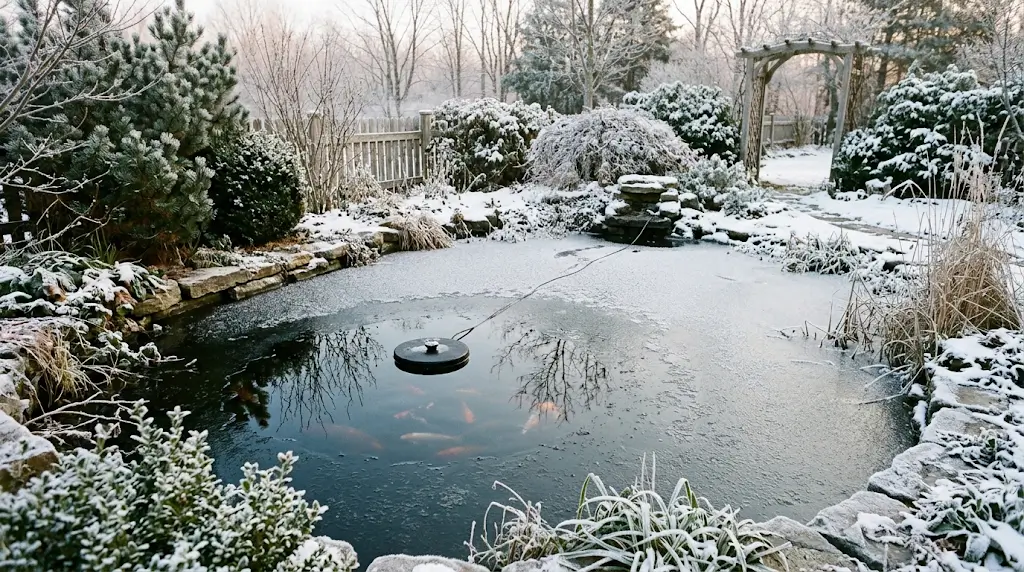
I still remember the January morning that changed the way I keep fish. I walked out with a cup of coffee, looked at my little backyard pond, and saw a flat white sheet of ice from one edge to the other. There were no ripples, no movement, and no sign of the goldfish I had fed all summer. I stood there for a full minute, convinced I had lost every one of them. They were fine, but only through luck, and that scare pushed me to learn properly how to keep outdoor fish pond from freezing. After many winters and plenty of mistakes, I can tell you it is far easier than most beginners fear.
If you are new to outdoor fish keeping, this guide is written for you. I will explain how to keep outdoor fish pond from freezing in plain language, show you why each method works, and share the real mistakes I made so you do not repeat them. By the end you will know which equipment to buy, when to set it up, and exactly what to do on the coldest night of the year.
The methods for how to keep outdoor fish pond from freezing range from a cheap air stone to a fully insulated cover, and the right choice depends on your climate, your pond and your budget. I will cover all of them, then give you the simple routine I follow every year.
Why Knowing How to Keep Outdoor Fish Pond from Freezing Matters
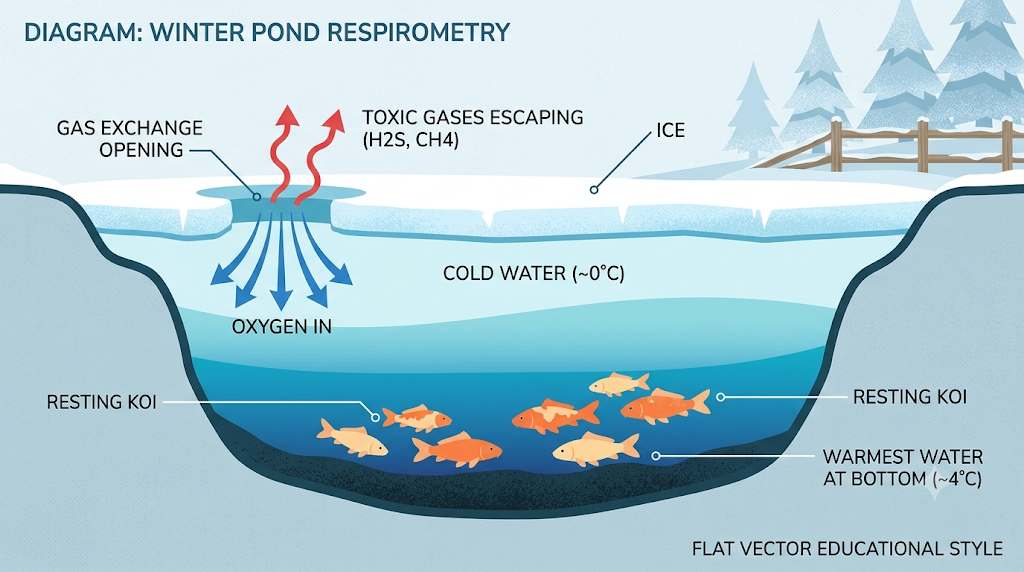
Many beginners assume the ice itself kills fish. In most cases it does not. Koi and goldfish are cold-water species, and when the temperature falls they slow down to a near-dormant state. Their metabolism drops, they stop eating, and they settle in the deepest and warmest part of the pond, where the water stays a few degrees above freezing. A few days of surface ice is not a problem for them.
The real danger is a pond that stays completely sealed for weeks. Under the ice, fish waste, fallen leaves and dead plant matter keep breaking down, releasing gases such as ammonia, carbon dioxide and hydrogen sulfide. In open water those gases drift into the air. Under a solid lid of ice they have nowhere to go, and fresh oxygen cannot get in. Keepers call the result winterkill, and it is the number one reason pond fish die in cold regions.
This is the key idea to remember. When people ask how to keep outdoor fish pond from freezing, what they truly need is a way to keep a small gap open for gas exchange. You do not have to turn your pond into a swimming pool. You only need a hole, and you need it to stay open.
My First Winter: Three Mistakes I Hope You Never Make
I thought I understood how to keep outdoor fish pond from freezing because I had read one forum post and watched a short video. I was wrong, and my fish paid for it.
Mistake One: Smashing the Ice With a Hammer
That January morning, my first instinct was to grab a hammer and break through. I hit the ice hard, three or four times, and I watched my goldfish bolt in panic. One of them stayed upside down for several minutes. I later learned that the shock waves from hitting ice can stress fish badly and even injure them, especially when they are sluggish from the cold. A fish that survives winterkill can still be harmed by the rescue attempt. The safe way is to melt a hole, which I explain below.
Mistake Two: Turning Off the Pump and Hoping
Because I had read that fish ‘sleep’ in winter, I switched off my filter and pump and walked away. A week later the pond was frozen across the surface and the water had turned cloudy and foul-smelling. With no water movement and no hole, the gases built up. I lost two of my six goldfish that winter. It was a painful, avoidable lesson.
Mistake Three: Feeding Fish in Cold Water
In November I was still tossing in regular summer pellets because the fish looked hungry. They were not hungry. They were just reacting to me. Cold fish cannot digest food properly, and undigested food rots in the gut and in the water. Once I changed my feeding habits, which I explain later, my fish came through the cold months in far better condition.
Those three errors taught me more about how to keep outdoor fish pond from freezing than any book, and every method in this guide is built on them.
First, Understand Your Climate and Your Pond
The right answer to how to keep outdoor fish pond from freezing depends on where you live and what kind of pond you own. Before you spend a cent, take ten minutes to answer these questions.
How cold does it get, and for how long? A pond in a mild region that sees a few frosty nights needs very little help. A pond where temperatures stay below freezing for weeks needs a proper plan. Check the average winter low for your area and note how many consecutive days stay below zero.
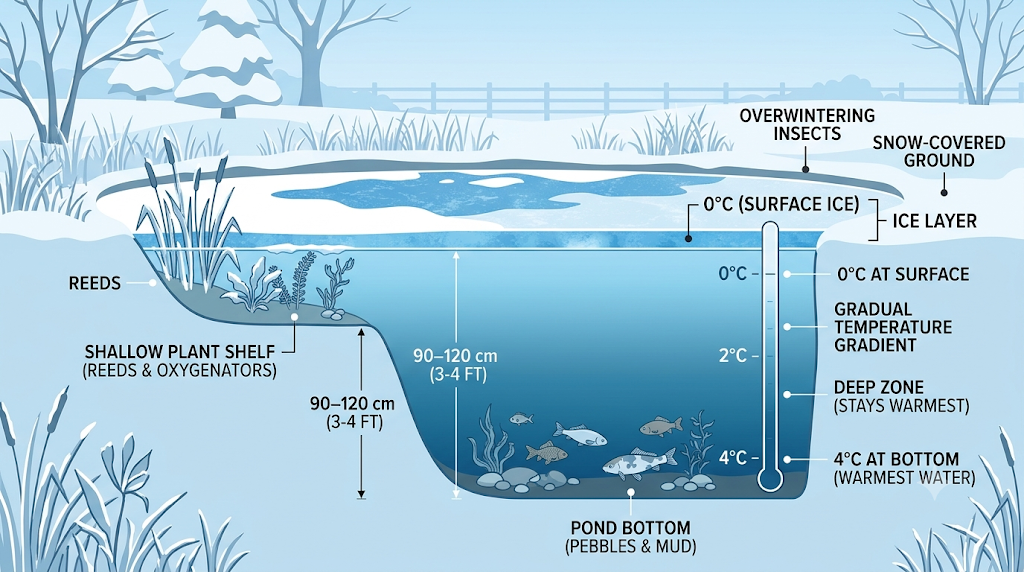
How deep is your pond? Depth is the single biggest factor. Water is densest at about 4°C (39°F), so the deepest part of a pond tends to sit near that temperature even when the surface is frozen. A pond that is only 30 cm (12 inches) deep can freeze nearly to the bottom, while one that is 90 cm (3 feet) or deeper usually keeps a safe layer of liquid water below the ice.
What are you keeping? Goldfish and koi are hardy and tolerate cold well. Tropical or fancy varieties may not. If you are unsure, ask the seller about the cold tolerance of your fish before the first frost.
How big is the pond? Larger volumes of water change temperature slowly. A small container pond or a shallow preformed pond is much more vulnerable than a large lined pond.
Once you know the answers, you can pick from the methods below. For anyone wondering how to keep outdoor fish pond from freezing in a mild region, a de-icer or an air pump is usually enough. Cold climates benefit from combining two or three methods, and extreme climates may need a heater or an insulated cover as well.
The Best Equipment for How to Keep Outdoor Fish Pond from Freezing
Every piece of equipment below can help with how to keep outdoor fish pond from freezing, but you rarely need all of them. I will tell you what each one does, what it costs to run, and what I actually use.
Floating Pond De-Icer: My First Choice for Beginners
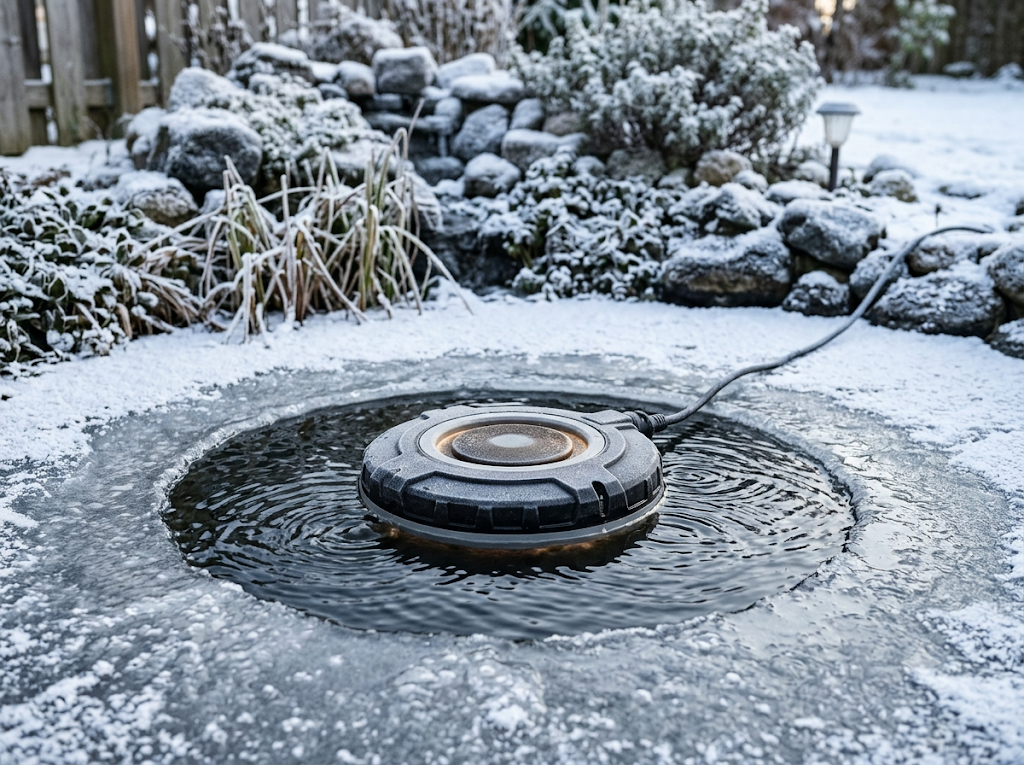
A floating de-icer is a small heating element, usually between 100 and 300 watts, that sits on the surface of the water. It does not heat the whole pond. It simply melts a hole in the ice and keeps it open. Most models include a thermostat, so they only switch on when the air temperature falls close to freezing, which keeps electricity use low.
When I finally bought one, I wished I had done it years earlier. It cost less than a month of my coffee habit, and it kept a clear opening in the surface through a week of minus 10°C nights. If you want the simplest, most dependable answer on how to keep outdoor fish pond from freezing, start here. Choose a model rated for your climate, make sure it is designed for ponds, and keep the cable away from the liner so nothing melts or snags.
One mistake to avoid: I once bought the cheapest unit I could find without checking its wattage. It could not cope with a hard freeze and the hole closed over within hours. Match the wattage to your winter, not your wallet.
Air Pump and Air Stone: Cheap and Effective
An air pump pushes air through a stone or diffuser, creating a stream of bubbles. Moving water is much harder to freeze, and the bubbles add oxygen while helping gases escape. Many keepers use an aerator alone in mild climates.
There is a trick that took me two winters to learn. Do not place the air stone on the very bottom of the pond. Bubbles on the bottom stir the warmer deep water up to the surface, where it cools quickly, and the fish lose their safe, stable refuge. Instead, hang the stone at mid-depth or place it on a shelf in the shallower part of the pond. If you could buy only one item for how to keep outdoor fish pond from freezing in a moderate climate, a well-placed aerator is a strong candidate.
Keep the air pump itself in a dry, sheltered spot above the water level, and use a check valve so water cannot siphon back into the pump if the power fails.
Running Your Pump in Winter, With Care
Some keepers run a small submersible pump all winter, and some switch it off. I have done both. The risk with a running waterfall or stream is that spray lands on rocks and edges and freezes into ice dams. These can redirect water out of the pond, and I once lost several inches of water overnight this way before I noticed.
If you want to keep a pump running, lower it to mid-depth, turn off or bypass the waterfall, and use a gentle return that does not spray. Otherwise, rely on a de-icer and an aerator and leave the pump off. Biological filters also slow down in the cold, so do not expect them to work as they do in summer.
Pond Heater: For Extreme Cold or Valuable Fish
A pond heater raises the temperature of the whole body of water, which is more than most ponds need. It is useful in very cold regions or for ponds holding expensive koi, but it costs much more to run than a de-icer. I only recommend it if you live where winters stay well below freezing for months, or if your pond is small and shallow.
Insulated Cover or Mini Greenhouse
A simple frame covered with polycarbonate or heavy plastic sheeting traps heat and shields the surface from wind. Adding straw bales, foam board or a blanket on top increases the insulation further. My own set-up is a wooden frame with a clear panel and a foam layer on top.
The important rule is to leave a vent gap. Never seal the pond completely, because trapped gases are exactly what we are trying to avoid. I once covered the pond tightly with a tarp during a storm and forgot about it for several days. When I lifted it, the smell of stale, sulfurous water was unmistakable. A cover helps with how to keep outdoor fish pond from freezing only when it lets the pond breathe.
Pond Depth: The Free Solution Most Beginners Overlook
Depth is the quiet hero of how to keep outdoor fish pond from freezing. If you are still planning your pond, it is the best long-term protection you can build in. In most temperate climates, a depth of at least 90 cm (3 feet) in one section gives the fish a safe, stable zone below the ice. In very cold regions, aim for 120 cm (4 feet) or more.
When I dug my second pond I made the deepest point 1.1 metres, with a gentle slope up to a shallow plant shelf. That single decision made every winter after calmer and cheaper. If you already own a shallow pond and cannot dig deeper, do not worry. Combine a de-icer, an aerator and some insulation, and you can still manage how to keep outdoor fish pond from freezing very well.
Also remember the volume of water. A large, deep pond holds heat, and that thermal mass is a free insulator.
My Step-by-Step Routine for How to Keep Outdoor Fish Pond from Freezing
This is the routine I follow every year. It is simple enough for a complete beginner, and it has kept my fish healthy for many winters in a row.
- Start in early autumn. Begin preparing before the first frost, when the water is around 10–15°C (50–59°F). Do not wait for a freeze to find out your equipment does not work.
- Remove leaves and debris. Net out fallen leaves and dead plant matter regularly. Rotting material is what creates toxic gases under the ice. I put netting over the pond from mid-autumn, and it saves me hours of cleaning.
- Do a partial water change. Replace about 10–20 percent of the water with treated water so the pond goes into winter clean. Avoid big water changes late in the season.
- Switch to cold-water food, then stop. When the water drops to around 10°C (50°F), feed a wheatgerm-based diet in small amounts. Once it stays below about 8°C (46°F), stop feeding completely until spring.
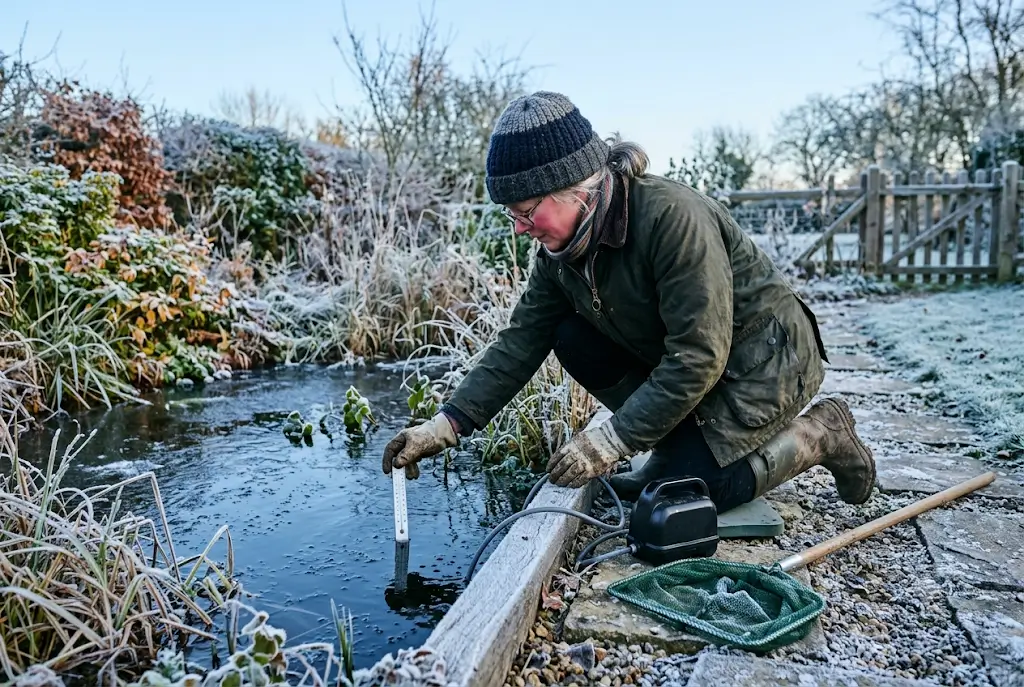
- Install your equipment. Place the de-icer and the aerator in the pond before the first hard freeze. Test them, check the cables, and make sure all plugs are weatherproof and connected to a protected outlet.
- Add insulation if needed. In cold regions, fit a cover with a vent gap once the weather turns. Check the vent regularly so it does not clog with snow.
- Check every few days. During cold snaps, I walk out every morning. I confirm the hole is open, the equipment is running, and the fish are resting quietly near the bottom.
Following these seven steps has made how to keep outdoor fish pond from freezing a routine rather than a worry. Prevention takes about an hour in autumn and two minutes a day in winter.
What to Do If Your Pond Freezes Over Anyway
Even with good preparation, things can go wrong. A power cut, a faulty de-icer or an unusually brutal cold snap can leave you with a sealed pond. Do not panic, and do not reach for the hammer.
The safe method is to melt a hole. Fill a pan or kettle with hot water, not boiling, and set the pan on the ice. It will slowly melt through. Refill it with hot water as it cools, and lift the pan away once the hole is open. Pouring boiling water directly onto the ice is a bad idea, because sudden temperature swings can harm the fish.
Once the hole is open, restart your de-icer or aerator, check that nothing else has failed, and keep an eye on the pond over the next day or two. If the fish look sluggish, do not try to feed them or move them. Fish in cold water are fragile, and handling them is more stressful than leaving them alone.
This is one more reason why knowing how to keep outdoor fish pond from freezing in advance is better than rescuing a frozen pond later.
Power Cuts and Backup Plans
Every honest guide on how to keep outdoor fish pond from freezing should talk about power cuts, because that is when most problems occur. During a storm one January, my power was out for nearly 20 hours. I had no backup, and the surface sealed over during the coldest part of the night.
After that, I made a short backup plan. I keep a battery-powered air pump in a cupboard with fresh batteries. I keep a small pan and a flask ready for the hot-water method. And I add extra insulation on the coldest forecast nights so the surface freezes more slowly. A battery air pump costs very little and can protect the whole pond for the hours you need.
If outages are common where you live, consider a small portable power station or a solar-powered aerator. They are not essential, but they bring real peace of mind.
Feeding Fish in Winter: Less Is Safer
Feeding is closely connected to how to keep outdoor fish pond from freezing, because uneaten food adds to the waste that builds up under the ice. The rule I now follow is simple. When the water is above about 10°C, feed lightly with a cold-water formula. Between roughly 8°C and 10°C, offer a tiny amount of easily digested wheatgerm food once in a while. Below 8°C, stop feeding.
Use a pond thermometer so you are guessing less. Air temperature can be misleading, and a mild afternoon does not mean the water is warm. Fish will not starve in winter. They live off stored fat, and a well-fed autumn fish will come through very comfortably. Watch your fish quietly from a distance, and resist the urge to tap on the water or disturb them.
Pond Plants and Winter Care
Plants add beauty and oxygen in summer, but they can become a problem in winter if left to decay. Trim dead leaves from hardy marginal plants, and move tender plants indoors or to the deepest part of the pond. Remove any dying floating plants such as water hyacinth, which will rot and pollute the water.
I lost a batch of lilies in my second year because I ignored them, and the water smelled terrible by February. Since then, I trim the plants in late autumn and remove the debris. It is a small job, but it supports everything else you do about how to keep outdoor fish pond from freezing safely, because fewer rotting leaves means fewer toxic gases beneath the ice.
Frequently Asked Questions
What is the easiest method for how to keep outdoor fish pond from freezing?
For most beginners, a thermostatic floating de-icer is the easiest and most reliable choice. It keeps a hole open, uses little electricity, and needs almost no attention. In a mild climate, a well-placed aerator can do the job alone.
Is it okay if my pond freezes over completely?
A short freeze with surface ice is generally safe, as long as the pond is deep enough and gases can escape. A pond that stays sealed for weeks is dangerous. That is why a small opening matters so much.
Can I use a pond heater instead of a de-icer?
You can, but heaters are expensive to run and are not necessary for most ponds. A de-icer is usually the more economical solution.
Does a waterfall or fountain stop a pond from freezing?
Not reliably. In very cold weather, a waterfall can freeze or throw spray that builds ice dams. If you want moving water, use a gentle aerator at mid-depth rather than a big splashing feature.
How deep should my pond be to survive winter?
In most temperate climates, aim for at least 90 cm (3 feet) in one section. In very cold regions, 120 cm (4 feet) or more is better.
Should I feed my fish in winter?
Feed lightly with cold-water food only while the water is above about 8–10°C. Once it drops below that, stop and wait until spring.
Final Thoughts on How to Keep Outdoor Fish Pond from Freezing
Looking back, my first frozen pond was one of the best things that happened to my fish keeping. It forced me to understand what really goes on in a pond in winter, and it taught me that the answer is not to fight the cold but to work with it. Fish are tougher than we think. What they need from us is a gap in the ice, clean water and a calm, stable environment.
If you remember only one thing about how to keep outdoor fish pond from freezing, remember this: prepare before the freeze, keep a hole open, feed sparingly, and never smash the ice. Choose a floating de-icer or an aerator as your starting point, add depth or insulation if your climate demands it, and follow the seven-step routine above. Do these things and you will walk out on a frozen January morning with a calm heart instead of a racing one.
Winter pond care is a skill you build season by season. I am still learning each year, and I have made every mistake I described here. Use my errors as a shortcut, and soon how to keep outdoor fish pond from freezing will feel like second nature.