Finaquatics

Best Filter for a Quarantine or Hospital Tank: A Beginner’s Guide From 10+ Years of Fishkeeping

best filter for a quarantine or hospital tank

The first fish I ever lost in a hospital tank didn’t die from the disease I was treating. It died because of the filter I chose.

I had a sick goldfish, a spare ten-gallon tank, and a brand-new hang-on-back filter that I thought was perfect. Within two days, the poor fish was pinned against the glass by the current, exhausted and stressed, and the illness got worse. That was my first painful lesson, and it’s the reason I’m writing this guide.

I have kept fish for more than ten years, and I have set up, broken down, and rebuilt dozens of quarantine and hospital tanks since that day. If you’re searching for the best filter for a quarantine or hospital tank, you’re asking exactly the right question. Most beginners spend hours choosing a filter for their main aquarium, then grab whatever is cheapest for the sick-fish tank. That is backwards. A harsh or badly chosen filter in a small tank can undo everything your medication is trying to do.

In this guide, I’ll share what I’ve learned, the mistakes I made, and the exact setup I now trust. By the end, you’ll know what the best filter for a quarantine or hospital tank is, why it works, and how to set it up so your fish have the best chance to recover.

Why Your Filter Matters Even More in a Hospital Tank

In a big, established display tank, there’s a lot of forgiveness built in. A large volume of water dilutes mistakes, and beneficial bacteria have colonized every surface. A hospital or quarantine tank is the opposite. It’s small, usually bare, and the fish inside are already stressed or sick.

Here’s why the filter matters so much in this situation:

  • Stressed fish are less tolerant of poor water. Even a small ammonia or nitrite spike that a healthy fish would shrug off can be dangerous for a weak one.
  • Small tanks change fast. In five or ten gallons, one missed day can push the water quality in the wrong direction.
  • Medication changes the rules. Some filter media absorb medicine, and some medicines can harm the bacteria living in your filter.
  • Strong flow exhausts weak fish. A sick fish needs rest, not a constant battle against a current.

So when I talk about choosing the best filter for a quarantine or hospital tank, I’m not talking about the most powerful or most expensive one. I’m talking about the safest, gentlest, and most reliable one.

What Is the Best Filter for a Quarantine or Hospital Tank? The Short Answer

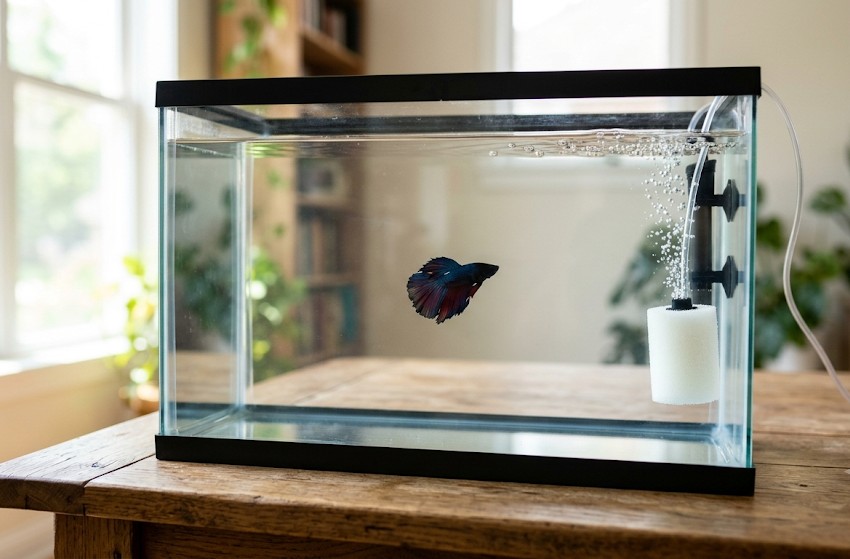
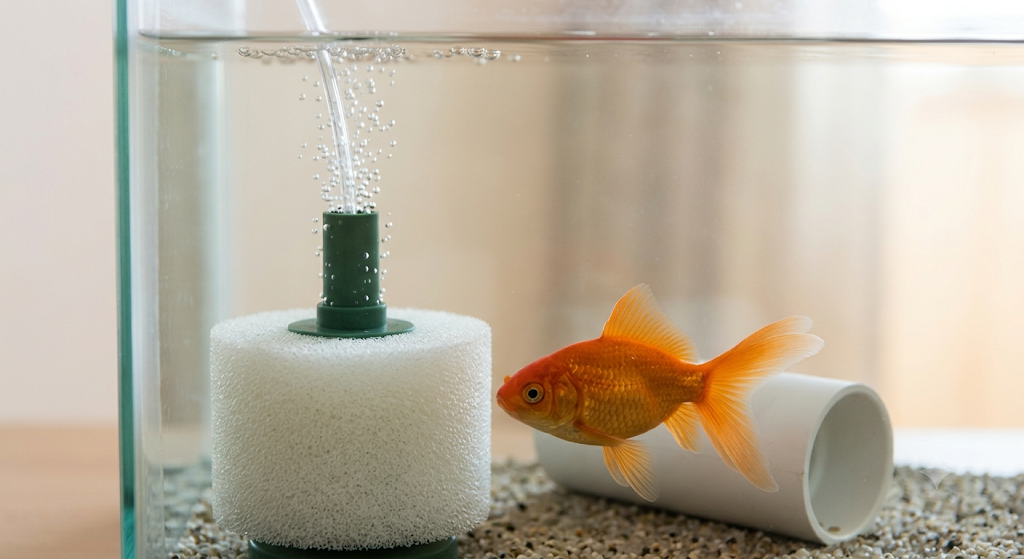
If you want the quick answer, here it is: the best filter for a quarantine or hospital tank is an air-driven sponge filter.

Over the years, I’ve tried hang-on-back power filters, small canister filters, internal filters, and even undergravel filters. The sponge filter has beaten all of them for this specific job. Here’s why:

  • Gentle flow. The bubbles rise through the sponge and pull water through slowly. Bettas, goldfish, shrimp, and fry can all rest comfortably.
  • No carbon to trap medicine. Nothing in a basic sponge filter pulls your medication out of the water.
  • A home for beneficial bacteria. The sponge has a huge surface area where bacteria can grow, and the sponge can be moved from one tank to another.
  • Cheap and simple. There’s no motor under the water, no impeller to jam, and no intake tube to suck up a tiny or injured fish.

That’s why, whenever a friend asks me for the best filter for a quarantine or hospital tank, my answer is always the same: a sponge filter plus a reliable air pump.

Quarantine Tank vs. Hospital Tank: What’s the Difference?

Beginners often use these two terms as if they mean the same thing, so let me clear it up.

A quarantine tank is where you keep new fish for two to four weeks before adding them to your main tank. The goal is to watch for disease and stop it from spreading. The fish in it usually look healthy.

A hospital tank is where you treat a fish that is already sick. The goal is to give medication in a controlled space without exposing healthy tank mates to it.

The good news is that the best filter for a quarantine or hospital tank is the same in both cases. Both setups need gentle filtration, stable water, and a filter that plays nicely with medication. Because of this, I keep one tank that serves both purposes, and I clean and reset it properly between uses.

5 Things the Best Filter for a Quarantine or Hospital Tank Must Do

Before you buy anything, use this checklist. This is the exact list I use when someone asks me to review their setup.

  1. Provide gentle flow. If you can see the fish being pushed around, the flow is too strong.
  2. Be medication-friendly. The filter should not rely on carbon or other media that absorb medicine.
  3. Hold plenty of beneficial bacteria. The sponge or media should give bacteria lots of space to grow, so ammonia and nitrite don’t build up.
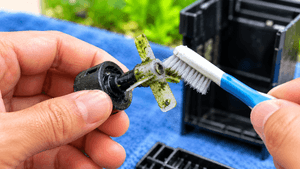
  4. Be easy to clean and disinfect. You’ll reuse this equipment, so it must be simple to rinse and sanitize.
  5. Be affordable and easy to keep as a spare. The best setup is the one you already have ready before an emergency.

If a filter fails even one of these tests, it isn’t the best filter for a quarantine or hospital tank, no matter how good the reviews are for a regular aquarium.

best filter for a quarantine or hospital tank

My Pick for the Best Filter for a Quarantine or Hospital Tank: A Sponge Filter With Extra Media Space

The sponge filter I recommend, and have used for many years, is one with additional media space. Besides the main sponge, it has extra room inside where you can add biological media for even more bacteria. In a small tank, that extra capacity is a real advantage. It gives you a bigger safety margin when a sick fish is producing waste and you’re adding medication.

This is the filter I would buy again as the best filter for a quarantine or hospital tank, and here are the benefits I’ve seen firsthand:

  • Dual-purpose filtration. The sponge handles mechanical filtration (catching debris), while the media space supports biological filtration (converting ammonia and nitrite).
  • Gentle and adjustable. Paired with an air valve, you can turn the flow down to a trickle for weak fish.
  • Easy to seed. Drop it into your main tank or sump for a few weeks, and it becomes a ready-to-go hospital filter.
  • Safe for fry and shrimp. The sponge covers the intake, so small animals can’t get sucked in.
  • Low running cost. It runs on an air pump, which uses very little electricity.

If you want the same type of filter I keep in my fish room, you can check it here:

👉 Check the sponge filter with extra media space on Amazon

Sponge Filter vs. Power Filter in a Hospital Tank

I’m not against power filters. I use them on my larger display tanks, and they do a great job there. But in a hospital setup, they bring problems that a sponge filter avoids.

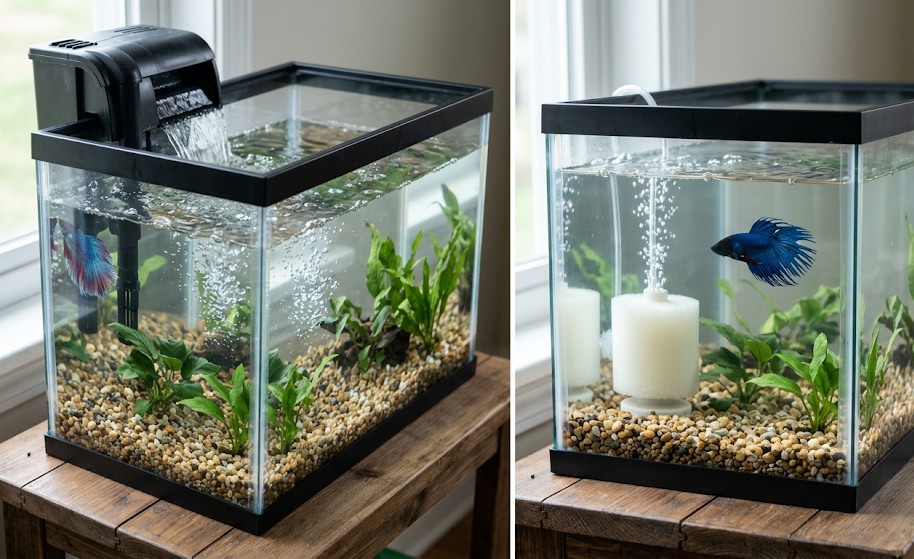
Flow strength. Even a small hang-on-back filter can create a current that a sick betta or fancy goldfish simply can’t handle.

Media that fights your treatment. Many power filters come with carbon cartridges. Carbon pulls medication out of the water, which means your treatment may not work.

Intake dangers. Weak or small fish can get pulled toward the intake, and fry can be sucked right in.

Cleaning risks. If you rinse the media in tap water or replace it all at once, you can wipe out your bacteria. If you do use a power filter elsewhere, learn how to clean an aquarium power filter without killing beneficial bacteria  so your main tank stays healthy.

For these reasons, a sponge filter is the best filter for a quarantine or hospital tank in almost every situation I’ve faced, and I’ve only ever regretted using anything else.

Don’t Forget the Air Pump: The Other Half of the Best Filter for a Quarantine or Hospital Tank

A sponge filter is only as good as the air pump behind it. Many beginners spend their money on the filter and then plug it into a cheap, noisy pump that dies in two months. When your pump fails in a hospital tank, the filter stops, and the water quality starts to fall right away. That is why the pump is half of the best filter for a quarantine or hospital tank setup.

Here’s what I look for in an air pump:

  • Strong enough for the job. Choose a pump rated for a bigger tank than yours. That way, you can turn the flow down with an air valve instead of running the pump at its limit.
  • Quiet operation. A sick fish needs calm. A rattling pump next to the tank adds stress, and it will annoy you, too.
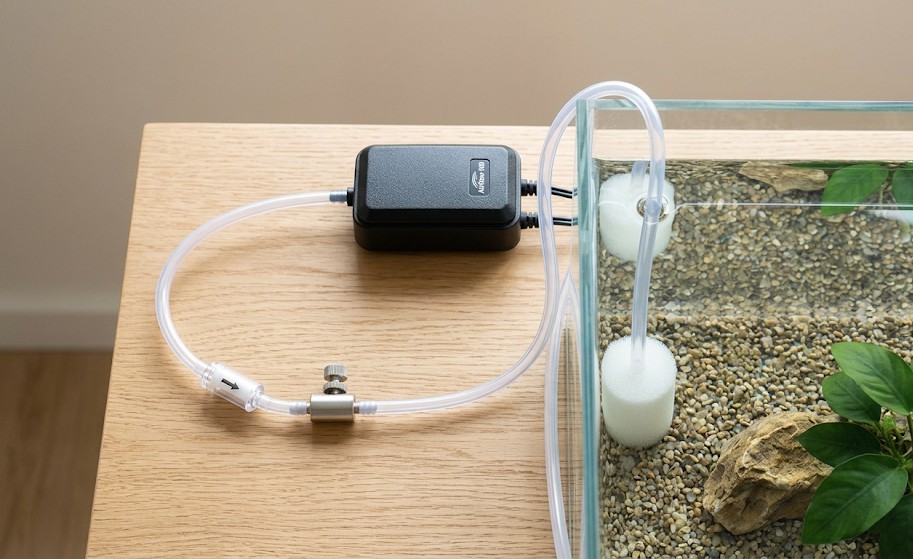
  • A check valve on the airline. This small plastic part stops water from siphoning back into the pump if the power goes out.
  • Placement above the waterline. Keep the pump higher than the water, or use a check valve, to protect it.

I use two different pumps depending on the tank size, and both have been reliable for me:

👉 Air pump option 1 on Amazon

👉 Air pump option 2 on Amazon

My advice: buy a spare pump or a battery-powered backup. Power cuts happen, and a hospital tank can’t wait.
Best Filter for a Quarantine or Hospital Tank

5 Real Mistakes I Made (So You Don’t Have To)

Experience is just a polite word for mistakes you’ve already paid for. Here are the biggest ones I made when I was learning how to pick the best filter for a quarantine or hospital tank.

Mistake 1: Using a Strong Filter on a Weak Fish

That goldfish I mentioned? I put a power filter on a tiny hospital tank because “more filtration must be better.” It wasn’t. Later, I made the same error with a betta that had fin rot. His long fins were being pushed around by the current, and he hid in a corner and stopped eating. When I swapped to a sponge filter with the air turned down low, he settled in within an hour. If I had known then what I know now about the best filter for a quarantine or hospital tank, I would have saved both of them a lot of stress.

Mistake 2: Leaving Carbon in the Filter

Early on, I treated a group of fish for ich with the medication poured in exactly as directed, but nothing improved. It took me four days to realize the filter still had a carbon cartridge. The carbon had been absorbing the medicine the whole time. Now I never put carbon in a medicated tank.

Mistake 3: Using a Brand-New Filter With No Bacteria

A rescue fish arrived at my house on a Friday night, and I set up a hospital tank in a hurry with a brand-new sponge filter. By Monday, the ammonia reading had shot up. A new filter has no bacteria on it, so it doesn’t clean the water biologically. That’s the most common beginner trap, and it’s why I now keep a spare sponge filter running in my main tank at all times.

Mistake 4: Washing the Sponge in Tap Water

I used to rinse my filter sponge under the kitchen tap. The chlorine in tap water can kill the beneficial bacteria you worked so hard to grow. Now I squeeze the sponge in a bucket of old tank water, and the bacteria survive.

Mistake 5: Not Having Anything Ready

The worst time to shop for the best filter for a quarantine or hospital tank is when a fish is already sick. I once lost a prized fish because I spent two days waiting for a delivery. Now I keep a complete emergency kit ready: a small tank, a sponge filter, an air pump, tubing, and a check valve.

Best Filter for a Quarantine or Hospital Tank

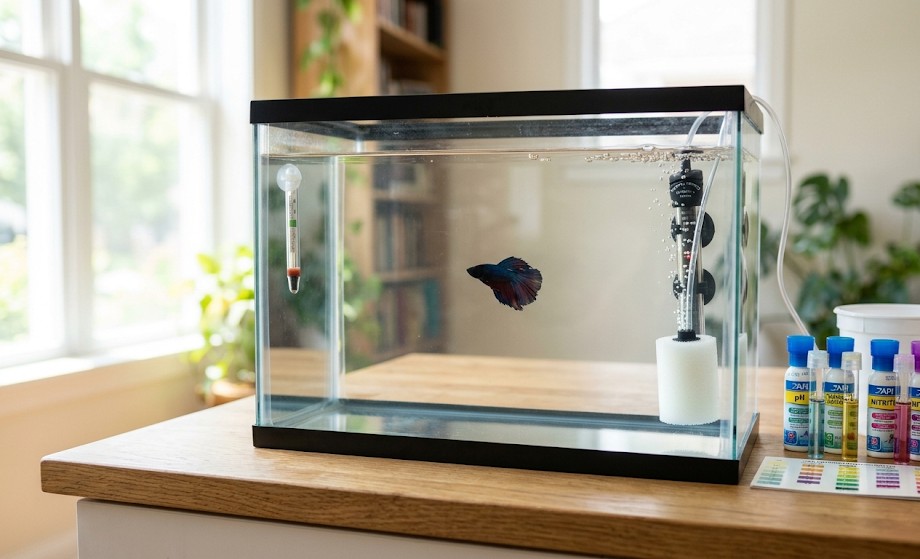
How to Set Up the Best Filter for a Quarantine or Hospital Tank, Step by Step

Here’s the simple process I follow every time. You can do it in under thirty minutes if your filter is already seeded.

  1. Choose the tank. A 5 to 10-gallon tank works for most small fish. Use a bigger one, around 20 gallons, for goldfish or larger fish.
  2. Keep it bare. Skip the gravel and decorations. A bare bottom makes it easier to see the fish and keep the tank clean. Add a simple hiding spot like a PVC pipe or a plastic plant.
  3. Place the sponge filter. Set it in the tank, attach the airline tubing, and connect it to your air pump with a check valve.
  4. Adjust the flow. Use an air valve to reduce the bubbles until the current is very gentle. If a fish struggles against it, turn it down more.
  5. Fill with matching water. Use dechlorinated water at the same temperature as the fish’s original tank.
  6. Add a heater if needed. Many treatments work better at a stable, appropriate temperature, so check your medication’s instructions.
  7. Test the water daily. Check ammonia and nitrite every day. This is the most important habit in hospital tank care.

With this routine, the best filter for a quarantine or hospital tank can do its job properly, and you’ll catch problems early.

Best Filter for a Quarantine or Hospital Tank

How to Keep Your Hospital Filter Ready at All Times (Seeding Explained)

Here’s the secret that makes a sponge filter so valuable: you can prepare it in advance.

Place a second sponge filter in your main tank, or in a healthy established tank, and let it run for at least three to four weeks. During that time, beneficial bacteria move in and grow on the sponge. When you need a hospital tank, you simply move that seeded sponge filter into the new tank. You now have a cycled filter instantly.

I use the same trick when I raise babies. If you want to see how I handle tiny, delicate fish, read my guide on how to raise fish fry at home, where a gentle sponge filter is also the star of the setup. The same gentle design that protects fry also protects sick fish, which is exactly why it’s the best filter for a quarantine or hospital tank.

Medications and Your Sponge Filter: What Beginners Don’t Know

This is an area where many new fishkeepers get surprised. Some medications can harm the beneficial bacteria in your filter. Certain antibiotics and methylene blue are well-known examples. If your fish is being treated with one of these, the bacteria in your sponge can die off, and ammonia can rise.

Here’s how I handle this:

  • Read the medication label. Look for any warning about biological filtration.
  • Test the water every day. Don’t assume everything is fine just because the fish looks okay.
  • Do partial water changes when needed. Replace some of the water with dechlorinated, temperature-matched water if ammonia or nitrite appears. Follow the medication instructions about how much to change.
  • Never add carbon. Remove it before treatment, and only add it back after treatment to clear leftover medicine.

This is another reason I trust a sponge filter as the best filter for a quarantine or hospital tank: it’s simple to monitor, and because the media is not complicated, it’s easy to understand what’s happening.

Choosing the Right Size

A common question I hear is, “How big should my sponge filter be?” Here are my general guidelines:

  • Up to 5 gallons: a small sponge filter with a gentle pump.
  • 5 to 10 gallons: a small to medium sponge filter.
  • 10 to 20 gallons: a medium sponge filter, or two small ones for extra bacteria and a backup.
  • 20+ gallons (such as larger goldfish): a medium to large sponge filter, plus a stronger pump.

Remember that you control the flow with the air valve, so a slightly bigger filter is not a problem. It simply gives you extra bacteria capacity. When people ask me about the best filter for a quarantine or hospital tank in a larger setup, I tell them to go up one size rather than down.

Pond Fish Need a Hospital Tank Too

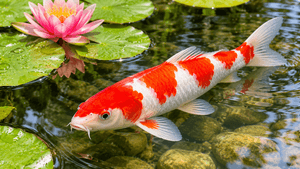
Many beginners think hospital tanks are only for aquariums, but outdoor pond keepers need them just as much. A sick koi or goldfish can’t be treated properly in a big pond, and cold weather makes things even harder. In winter, I often bring a struggling pond fish indoors, which is why I also wrote about how to keep an outdoor fish pond from freezing .

If you’re new to ponds, it also helps to choose healthy, hardy species from the start. My guide on what fish are best for outdoor ponds  covers this in detail. And no matter which fish you choose, a small indoor tank with the best filter for a quarantine or hospital tank gives you a safe place to quarantine new arrivals and treat problems before they spread through the pond.

Frequently Asked Questions

What is the best filter for a quarantine or hospital tank if I keep a betta?

A small sponge filter with the air flow turned low is ideal. Bettas have long fins and dislike strong currents, so gentle, bubble-driven filtration suits them far better than a power filter.

Can I use a power filter in a hospital tank?

You can, but I don’t recommend it for beginners. The flow is often too strong, and cartridges may contain carbon. If you must use one, remove the carbon, reduce the flow, and cover the intake.

Do I need a filter in a hospital tank at all?

In most cases, yes. A filter keeps ammonia and nitrite down and keeps the water moving. Some fishkeepers use daily water changes without a filter, but this is much harder for beginners to manage.

How long should I run a sponge filter before using it?

At least three to four weeks in an established tank if you want it fully seeded. If you need one in an emergency, a filter with a few days of running is better than a completely new one, but you must test the water daily.

Is the best filter for a quarantine or hospital tank also good for fry?

Yes. The gentle flow and protected intake make a sponge filter one of the safest choices for baby fish, too.

Final Thoughts: Choose the Best Filter for a Quarantine or Hospital Tank Before You Need It

If there’s one lesson I want you to take from my years of mistakes, it’s this: don’t wait for an emergency. The best filter for a quarantine or hospital tank is the one that’s already set up, already seeded, and ready to go when a fish gets sick or a new fish arrives.

A sponge filter with extra media space, paired with a reliable air pump, gives you gentle flow, safe filtration, and the flexibility to handle almost any situation. It’s cheap, simple, and trusted by experienced fishkeepers for good reason. Choosing the best filter for a quarantine or hospital tank isn’t about spending more money. It’s about choosing the right tool for a very specific job.

Start small, keep a spare seeded sponge, test your water daily, and your fish will thank you for it.

Leave a Comment

Your email address will not be published. Required fields are marked *

Scroll to Top