
I still remember the morning I lost eleven neon tetras. The tank looked spotless. The glass was clear, the filter was brand new-looking, and I was proud of myself. The night before, I had taken my power filter apart, scrubbed every piece under hot tap water, and put it back sparkling clean. By the next morning, my fish were gasping at the surface. I had wiped out the colony of good bacteria that kept the water safe, and I didn’t even know it.
That mistake happened early in my fishkeeping journey. After many years of keeping community tanks, planted tanks, and a few cichlid setups, I can tell you that learning how to clean aquarium power filter without killing beneficial bacteria is one of the most important skills a beginner can pick up. It is simple once you understand it, but it is also where most new hobbyists go wrong.
In this guide, I will walk you through everything step by step, using real examples and the mistakes I made so you don’t have to repeat them. If you want to know how to clean power filter without killing beneficial bacteria, you are in the right place.
Why Beneficial Bacteria Matter More Than Clean-Looking Filters
Before we get into how to clean aquarium power filter without killing beneficial bacteria, you need to understand why those bacteria are so important.
Fish produce waste all day long. They release ammonia through their gills and in their poop. Uneaten food and decaying plant leaves add more ammonia. Ammonia is toxic, even in small amounts. Beneficial bacteria, mainly living inside your filter media, convert ammonia into nitrite, and then into nitrate, which is far less harmful. This process is called the nitrogen cycle.
Here is the part beginners rarely hear: most of your beneficial bacteria do not live in the water. They live on surfaces, and the biggest surface area in your aquarium is inside your power filter. The sponges, ceramic rings, and bio-media are basically apartment buildings for bacteria.
So when you clean the filter, you are not just cleaning a machine. You are cleaning the home of the colony that keeps your fish alive. This is why knowing how to clean aquarium power filter without killing beneficial bacteria is not optional. It is the difference between a healthy tank and a sudden fish loss.
The Biggest Mistakes I Made (So You Don’t Have To)
Let me share the mistakes openly, because they taught me more than any book.
Mistake 1: Using tap water to rinse the media. Most municipal tap water contains chlorine or chloramine, which kills bacteria on contact. This is exactly what happened with my neon tetras. If you remember only one thing about how to clean aquarium power filter without killing beneficial bacteria, remember this: never rinse your media in untreated tap water.
Mistake 2: Replacing all the media at once. Years ago, I bought a fresh cartridge because the old one “looked dirty.” I threw the old one away and dropped the new one in. Within three days my water turned cloudy and the ammonia test showed a reading far above safe levels. I had basically restarted the nitrogen cycle in a tank full of fish.
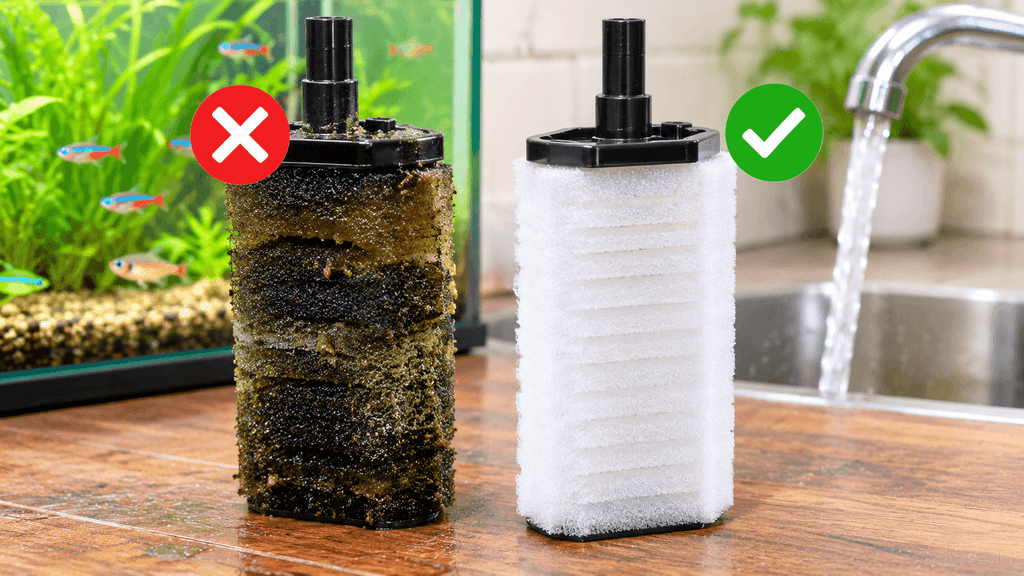
Mistake 3: Scrubbing media until it looked brand new. A little brown gunk on your sponge is healthy. It is a sign that bacteria and beneficial microorganisms are doing their job. Over-cleaning is as dangerous as never cleaning.
Mistake 4: Cleaning the filter and doing a huge water change on the same day. I did this once, with a 70% water change plus a full filter clean. The stress on the fish was obvious, and two of my gouramis got sick. I learned to space these tasks apart.
Mistake 5: Leaving the filter off for too long. If a power filter sits dry or without flow for a couple of hours, the bacteria inside can suffocate. Oxygen-loving bacteria need water flow to survive.
What You Need Before You Start
Preparation makes the whole process smooth. Here is the simple kit I keep ready for every filter cleaning session. Follow it and you will have no trouble with how to clean aquarium power filter without killing beneficial bacteria.
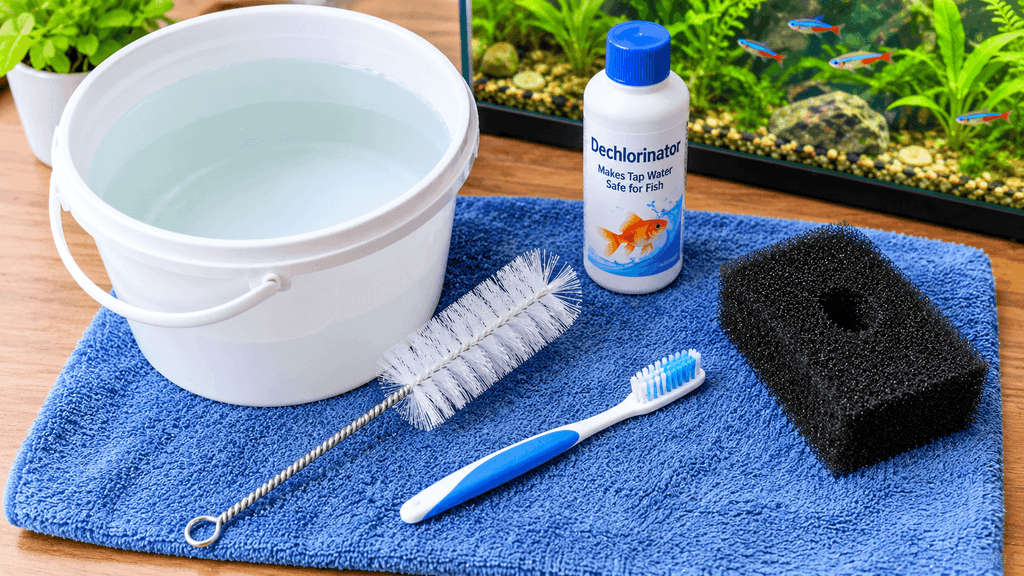
- A clean bucket used only for aquarium work (never one that has held soap or chemicals)
- Old tank water, taken during a water change
- A soft brush or an old toothbrush for the impeller area
- A small pipe or bottle brush for the intake tube
- A towel to protect your floor
- Dechlorinator (just in case you need to top up the tank)
- Gloves are optional, but I like them if I have cuts on my hands
That is all. No fancy chemicals and no soap.
How Often Should You Clean Your Power Filter?
There is no universal schedule. It depends on your tank size, fish count, feeding habits, and plants. As a general rule from my own tanks:
- Lightly stocked tanks: every 4 to 6 weeks
- Moderately stocked community tanks: every 3 to 4 weeks
- Heavily stocked tanks or big eaters (goldfish, cichlids): every 2 to 3 weeks
The best signal is not the calendar. It is the flow. When the water coming out of your filter slows down noticeably, it is time to clean. If you wait for the flow to nearly stop, you have waited too long, and dirt may have started to rot inside, which can affect water quality.
Over the years I’ve learned to watch my filter output like a speedometer. Once I see the flow weaken by roughly a third, I schedule a cleaning. This habit alone has kept me consistent with how to clean aquarium power filter without killing beneficial bacteria across multiple tanks.
Step-by-Step: How to Clean Aquarium Power Filter Without Killing Beneficial Bacteria
Now we get to the heart of the guide. Follow these steps in order. I have used this exact method on dozens of filters over the years.
Step 1: Do a Partial Water Change First
Begin by removing 20% to 30% of the tank water using a siphon. Put this water in your clean bucket. This is the water you will use to rinse your media. It is dechlorinated, at the right temperature, and full of the same minerals your bacteria are used to.
This single trick is the foundation of how to clean power filter without killing beneficial bacteria. The bucket of old tank water is your safety net.
Step 2: Unplug the Filter
Always unplug the power filter before touching it. This protects you from electric shock and protects the motor from running dry. If your filter is a hang-on-back model, lift it out. If it is a canister style, close the valves first, then disconnect the hoses.
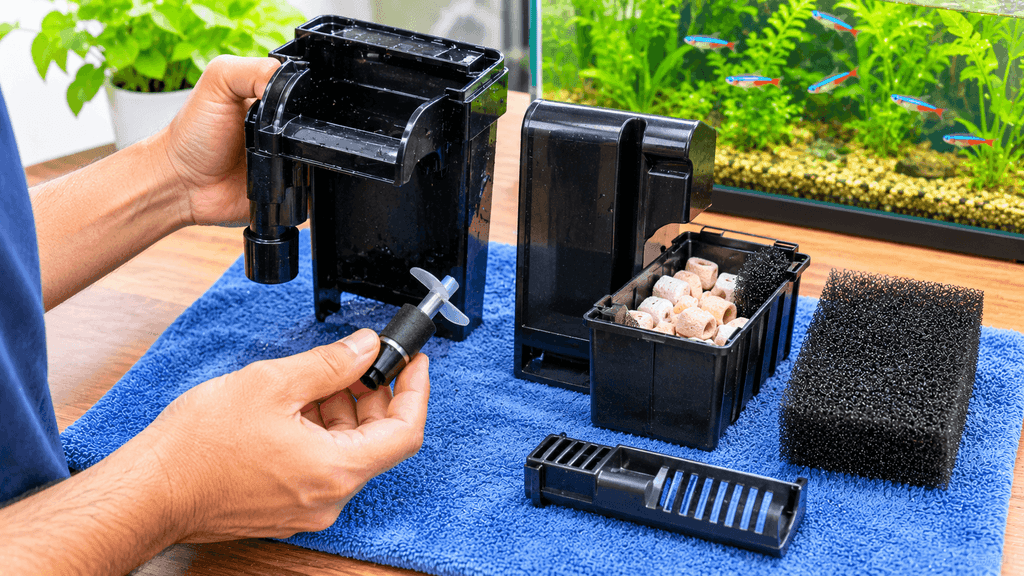
Step 3: Take the Filter Apart Gently
Take the filter apart carefully and note where each piece goes. My early tip for beginners: take a quick photo with your phone before disassembling. I once spent twenty minutes trying to remember how the baskets stacked together, and it was embarrassing.
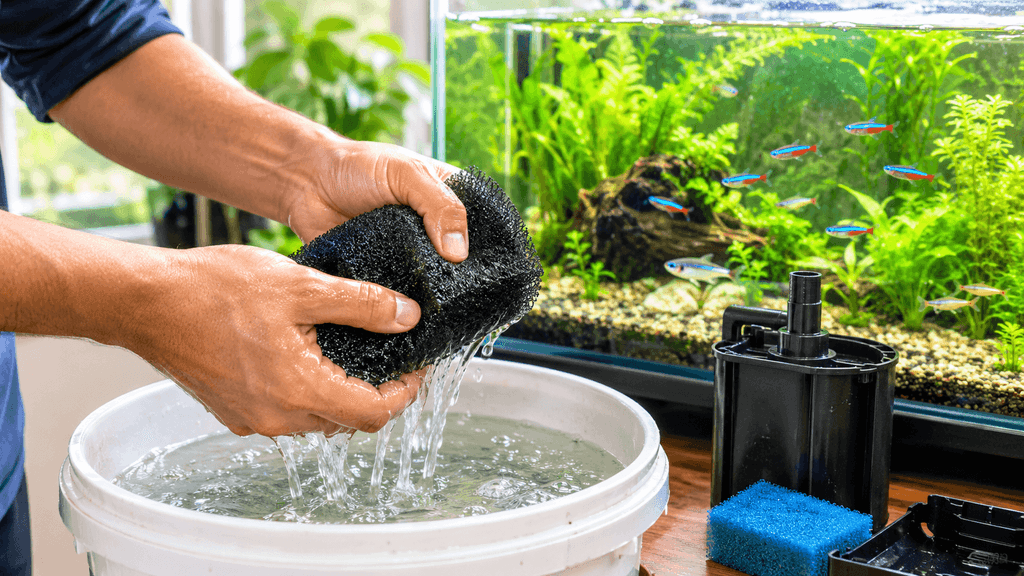
Place the media in the bucket of tank water immediately. Do not let it sit in open air. Remember, the bacteria inside need moisture and oxygen. If the media dries out, a large part of the colony is lost.
Step 4: Rinse the Sponge and Biological Media in Tank Water
Swish and gently squeeze the sponge in the bucket of old tank water. Do not wring it like a wet towel. Squeeze lightly a few times until the heavy brown debris comes out. The goal is not a clean white sponge. The goal is to remove the clogging dirt while keeping the bacteria living in the pores.
Ceramic rings, bio-balls, and similar media only need a very light swish. Never scrub them. These are your main bacteria homes. When I teach friends how to clean aquarium power filter without killing beneficial bacteria, I tell them to treat the bio-media like a sleeping baby: handle it gently and leave it alone as much as possible.
Step 5: Replace or Rinse the Mechanical and Chemical Media Carefully
Mechanical media like filter floss or pads can be rinsed in tank water, or replaced if they are falling apart. If you replace them, keep your bio-media in place so the bacteria colony stays intact. Chemical media like activated carbon loses effectiveness after about 3 to 4 weeks and can be replaced without hurting your biological filtration, because carbon is not where most of your good bacteria live.
The rule I follow is simple: never replace everything at once. If you need to change several things, stagger them over several weeks.
Step 6: Clean the Impeller and Intake Tube
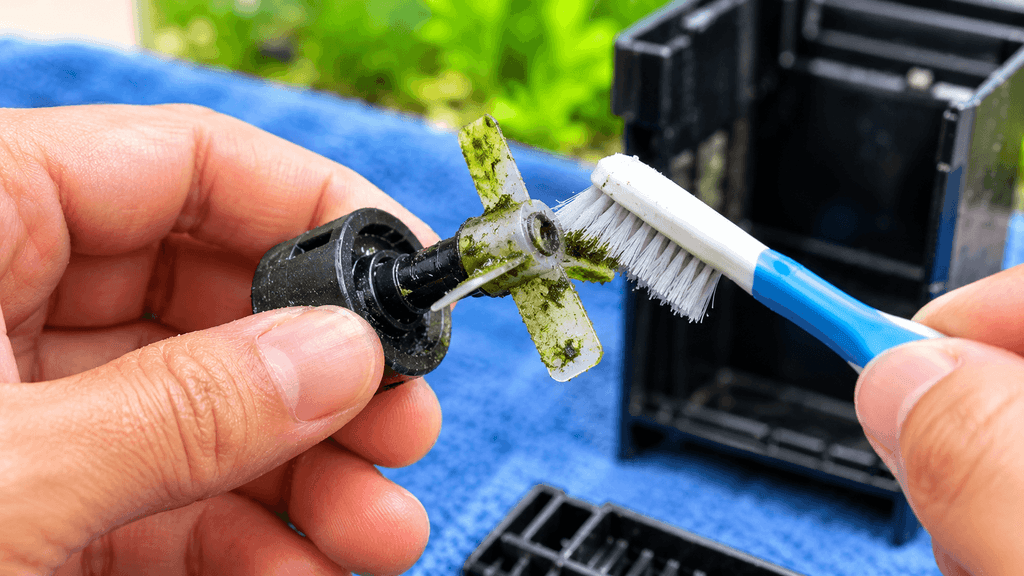
The impeller is the small spinning part that pulls water. It collects hair, snail shells, algae, and plant debris. Remove it, wipe it with a soft brush in tank water, and check the tiny shaft. A dirty impeller causes noise and weak flow.
Use your pipe brush to clean the intake tube. This part holds slimy buildup, and you can clean it a little more aggressively because it does not hold much of the bacteria colony. You can even use clean, hot (not chemical) water on the plastic housing, as long as the media never touches it. Many beginners get confused here, but the logic is easy: the media is alive, the plastic is not.
Step 7: Reassemble and Restart
Put everything back in the same order. Fill the filter chamber with tank water (for hang-on-back filters, this helps the pump prime). Plug it in and check that water is flowing smoothly. Listen for odd noises. If you hear a rattle, the impeller may not be seated correctly.
Step 8: Watch Your Fish and Test the Water
For the next 24 to 48 hours, watch your fish for stress signs like gasping, hiding, or clamped fins. If you have a test kit, check ammonia and nitrite the next day. Zero is the number you want. If you did the process correctly, you will see no spike at all. That is the best proof that you have learned how to clean aquarium power filter without killing beneficial bacteria.
Quick Recap: The Golden Rules
Whenever I am in a hurry, I come back to these rules. They are the core of how to clean aquarium power filter without killing beneficial bacteria:
- Use old tank water, never tap water.
- Clean only part of the filter media each time.
- Don’t over-scrub. A bit of brown gunk is healthy.
- Never let the media dry out.
- Never replace all the media together.
- Space your water changes and filter cleaning at least a few days apart.
- Clean when flow drops, not on a random schedule.
A Real-Life Example: My 55-Gallon Community Tank
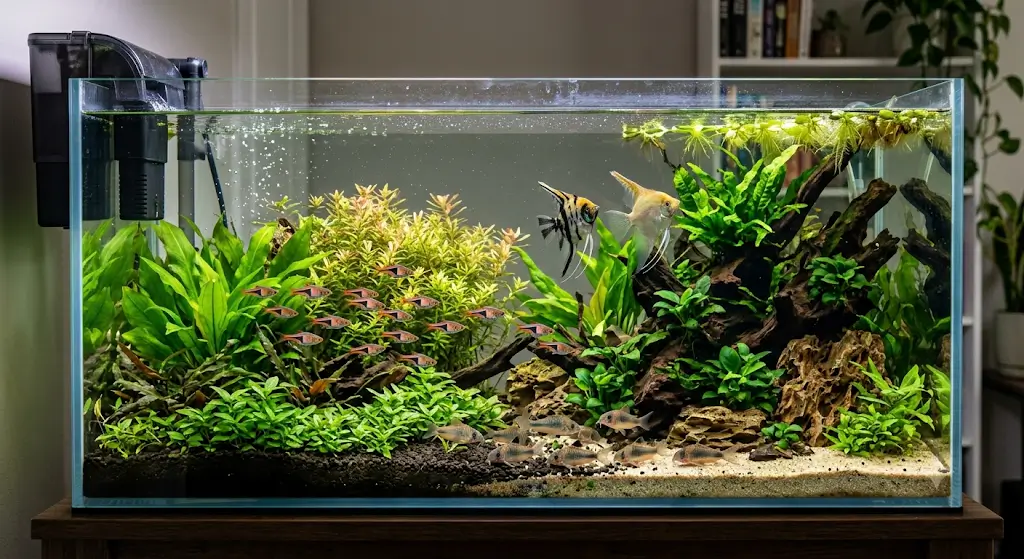
Let me give you a real example of how all this plays out. A few years ago, I ran a 55-gallon community tank with rasboras, corydoras, a pair of angelfish, and lots of live plants. The filter was a power filter that I cleaned every four weeks.
For the first six months, I cleaned it the wrong way, with tap water and fresh replacement cartridges. Every single time, my tank went through a small “mini-cycle.” The water turned slightly cloudy for about a week, and my corydoras kept acting stressed.
Then I switched to the method in this article. I rinsed only half the media each time, always in tank water. The cloudiness disappeared completely, the fish became more active, and my plants began growing faster because the nitrogen cycle was stable. That one change in habit completely changed how I approached how to clean power filter without killing beneficial bacteria, and I have never looked back.
Common Signs You Have Harmed Your Beneficial Bacteria
Even careful hobbyists make mistakes sometimes. Here are signs that you may have disturbed the bacteria colony:
- Cloudy, milky water a day or two after cleaning (a bacterial bloom)
- Ammonia or nitrite showing on your test kit
- Fish gasping at the surface or lingering near the filter outflow
- Foul smell coming from the tank
- Fish hiding more than usual or losing color
If you notice these, don’t panic. Do a 25% water change with dechlorinated water, reduce feeding for a couple of days, and test the water daily. A good bacteria starter product can also help restore the colony. Most tanks recover within a week or two if you act quickly. Learning how to clean aquarium power filter without killing beneficial bacteria also means learning how to recover when something goes wrong.
Choosing a Filter That Makes Cleaning Easier (My Personal Recommendations)
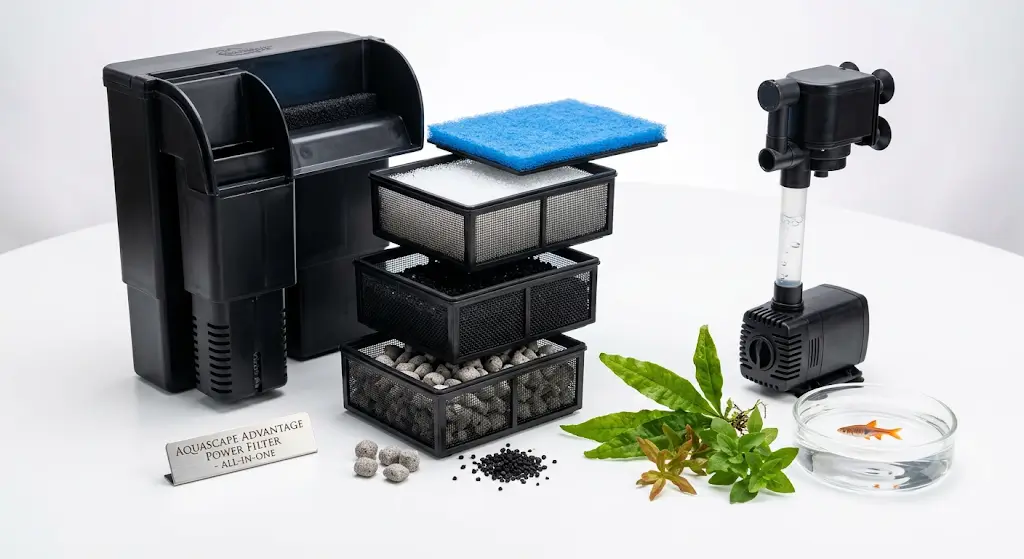
After many years, I’ve realized that the right filter makes this whole process much easier. A well-designed power filter lets you keep media in separate compartments, so you can clean one part at a time without disturbing the rest. This is a huge advantage when you are following the steps for how to clean aquarium power filter without killing beneficial bacteria.
My Top Pick: The All-in-One Power Filter with Multiple Media Spaces
The power filter I have used for many years is an all-in-one model that combines mechanical, biological, and chemical filtration in one unit, with separate media spaces for different media. Having dedicated chambers means I can rinse the sponge section while leaving the bio-media section untouched. It also gives plenty of room for upgrading with extra bio-media if you want even more bacteria surface area. For beginners, that flexibility is gold.
Benefits I have personally enjoyed:
- Multi-stage filtration in a single unit, with mechanical, biological, and chemical stages
- Separate media spaces, so you can clean in stages and protect bacteria
- Reliable, steady flow over long periods of use
- Easy to open and reassemble, which saves time during maintenance
- Room to customize the media to match your tank
👉 Check this all-in-one power filter here ( My Favourite 😍)
Other Power Filters Worth Considering
Different tanks have different needs. Here are two more options that are worth a look, depending on your tank size and budget:
👉 View this power filter option here
👉 See another reliable power filter here
Whichever you choose, look for easy access to the media, adjustable flow, and enough space for biological media. Those three features make how to clean aquarium power filter without killing beneficial bacteria much simpler over the long term.
Disclosure: This article contains affiliate links. If you purchase through them, I may earn a small commission at no extra cost to you. I only recommend products I believe in.
Pro Tips for Keeping Your Filter and Bacteria Healthy Long-Term
Here are some extra habits that I’ve built over the years:
Add extra bio-media. Bacteria need surface area. If your tank is heavily stocked, add more ceramic rings or bio-media to your filter. More homes mean more bacteria and a more stable tank.
Keep a backup sponge. One of my favorite tricks is to keep a spare sponge in a corner of the tank or inside the filter for a few weeks. If anything goes wrong, you have a seeded sponge ready to go. This is an excellent safety measure when you are practicing how to clean power filter without killing beneficial bacteria.
Feed less. Overfeeding is the number one cause of dirty filters. Fish only need what they can eat in one to two minutes.
Never clean the filter and the substrate on the same day. Vacuuming gravel also removes bacteria. Spread your maintenance over the week.
Keep a maintenance log. Write down the date you cleaned each part of the filter. It sounds boring, but it prevents guesswork and over-cleaning.
Use a pre-filter sponge on the intake. A simple sponge over the intake tube catches large debris before it reaches the main media. This reduces how often you need to open the filter, which means fewer chances to disturb bacteria. It also protects baby fish and shrimp.
Frequently Asked Questions
Can I use tap water if I add dechlorinator?
Yes, if you treat the water fully and match the temperature, it can work in an emergency. But old tank water is still the safest method, and it is what I recommend for how to clean aquarium power filter without killing beneficial bacteria.
How much bacteria do I lose during cleaning?
Some loss is normal, which is why you should never clean everything at once. When you rinse gently in tank water, you only remove debris, and most of the colony stays in place.
Should I clean the filter when I do a water change?
You can, but I prefer to do them at different times. Doing both on the same day increases stress on the fish and the bacteria.
How long can a filter stay off before bacteria die?
Bacteria begin to suffer after one to two hours without water flow, and a longer shutdown can cause serious loss. Always keep your media wet, and restart the filter as soon as possible.
Can I clean a brand-new filter the same way?
New filters rarely need heavy cleaning. Let the bacteria colony establish for at least a month before making any major changes.
Is it ever okay to replace the sponge?
Yes, but only when it is falling apart. Place the new sponge next to the old one for a few weeks first, so the new one gets seeded with bacteria.
Final Thoughts
Fishkeeping is a long-term hobby, and the filter is the heart of every healthy aquarium. I lost fish early in my journey because I didn’t understand that a clean-looking filter is not the same as a healthy filter. Once I learned how to clean aquarium power filter without killing beneficial bacteria, my tanks became more stable, my fish lived longer, and maintenance became less stressful.
To summarize: use old tank water, clean gently, never replace everything at once, keep your media wet, and watch the flow instead of the calendar. Follow these habits, and you’ll never again face the heartbreak of waking up to sick fish after a maintenance session.
If you are a complete beginner, start small. Clean one part of the filter this month, and another part next month. Be patient and observe your fish. They will tell you whether you are doing it right. And if you ever feel unsure about how to clean aquarium power filter without killing beneficial bacteria, come back to this guide and follow the steps once more.
Happy fishkeeping!



Pingback: Best Filter for a Quarantine or Hospital Tank: A Beginner’s Guide From 10+ Years of Fishkeeping - Finaquatics