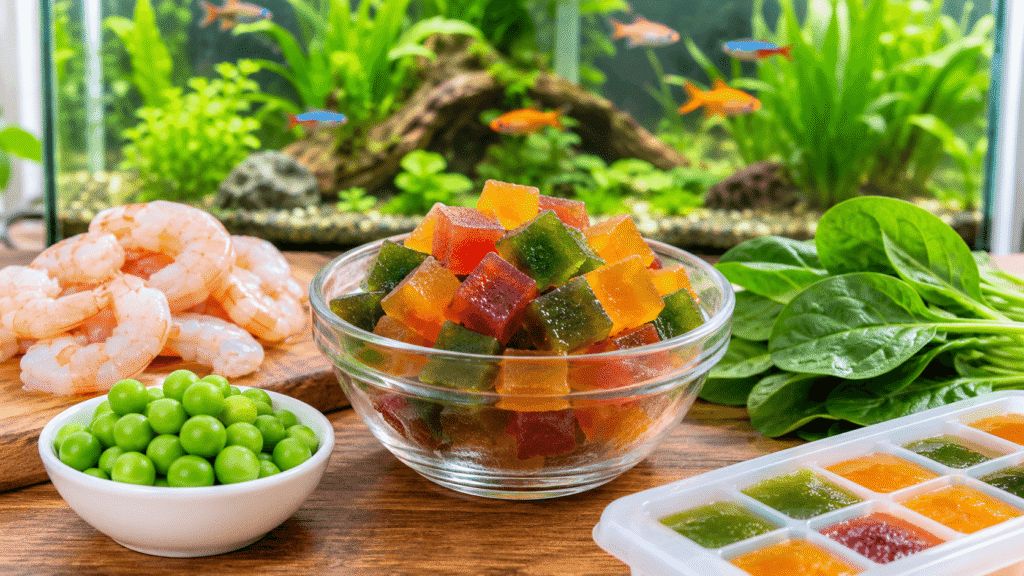
The simplest homemade fish food to make is a mixture of shrimp, white fish fillet, blanched peas & spinach. Mix together and set using plain gelatin. Chop into small cubes & freeze. Feed only what they can eat within 2 mins.
I’ve had fish for 8 years & changing to homemade fish food has really helped improve the colour, growth & energy of my fish. In this guide I’ll take you through how to make homemade fish food, using the same ingredients that I use.
What is Homemade Fish Food?
Homemade fish food is made from fresh ingredients using safe seafood, veg & a natural binder (such as gelatin). As it’s all made by you, there are no fillers or artificial preservatives. You can choose to feed this as a staple diet or as a healthy top-up to flakes & pellets.
Why Should I Try Homemade Fish Food?
Using fresh ingredients means all the natural goodness stays in them & they taste amazing to fish. The majority of my fussy eaters will eat the homemade food within 2 days.
It’s also much cheaper than premium brands. A batch only costs me roughly the same as a small tub of flakes & will last 2-3 months in the freezer.
Why choose to make homemade fish food?
There are many benefits to making your own fish food. The main benefits are improved nutrition, improved water quality and natural colours. Things I have noticed in my own tanks are;
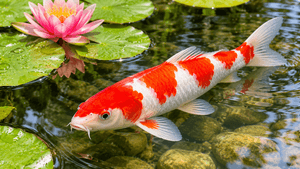
- Improved colours – My cichlids had brighter red colours within 6 weeks.
- Less waste – Fresh food is easily digested by the fish meaning less waste in my water.
- Increased appetite – Even shy fish ate.
- No secret fillers – I know exactly what is in all the cubes.
- Cheaper – Ingredients can be bought in bulk meaning they are very cheap.
What ingredients do you need?
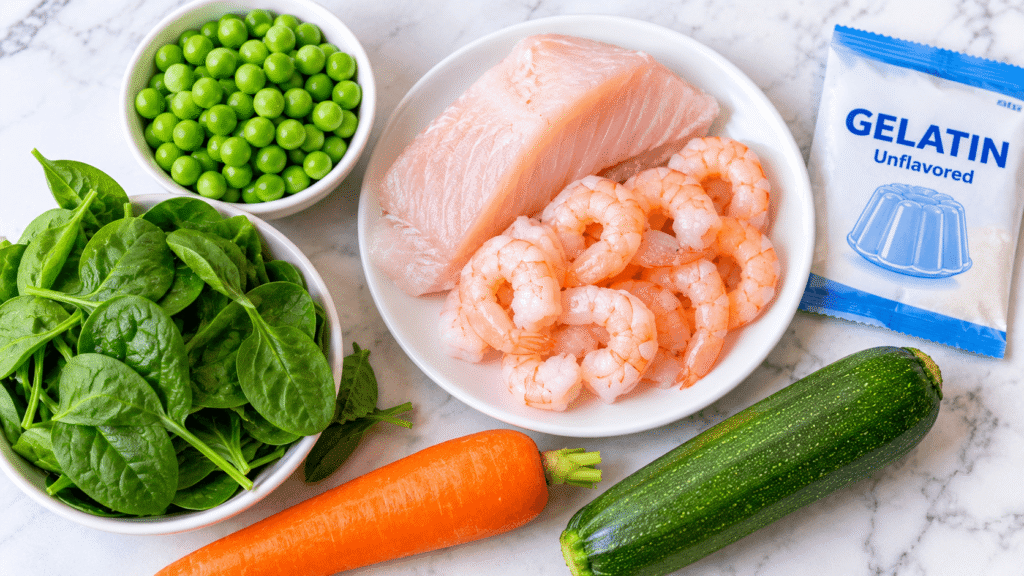
The best ingredients to use are lean proteins, soft vegetables and a safe binding agent. Make sure to use fresh, unseasoned ingredients. These are all ingredients I have used.
- Proteins
Raw or lightly cooked shrimp (de-shelled).
White fish fillets such as Tilapia or Cod.
Cooked egg yolk (small amounts).
Earthworms or Bloodworms (optional).
- Vegetables
Peas (blanched, shells removed)
Spinach
Zucchini
Carrot (boiled until soft)
Other ingredients
Unflavoured gelatine to bind.
Small pinch of garlic (optional to encourage fussy eaters).
Fish oil (2-3 drops per batch). (optional)
Which ingredients should you NEVER use in homemade food for fish?
Never add salt, spices, oil fried items, bread or processed meat to your homemade fish food. The fish can’t process any of these and they’ll cause bloating and cloudy water. Likewise avoid onion, dairy and fatty red meat.
I once added a bit of seasoned chicken to a test batch. The fish completely ignored it and the remainder of the batch fouled the tank overnight. I’ve never made that mistake again.
How to Make Homemade Food for Fish: Step-by-Step Recipe
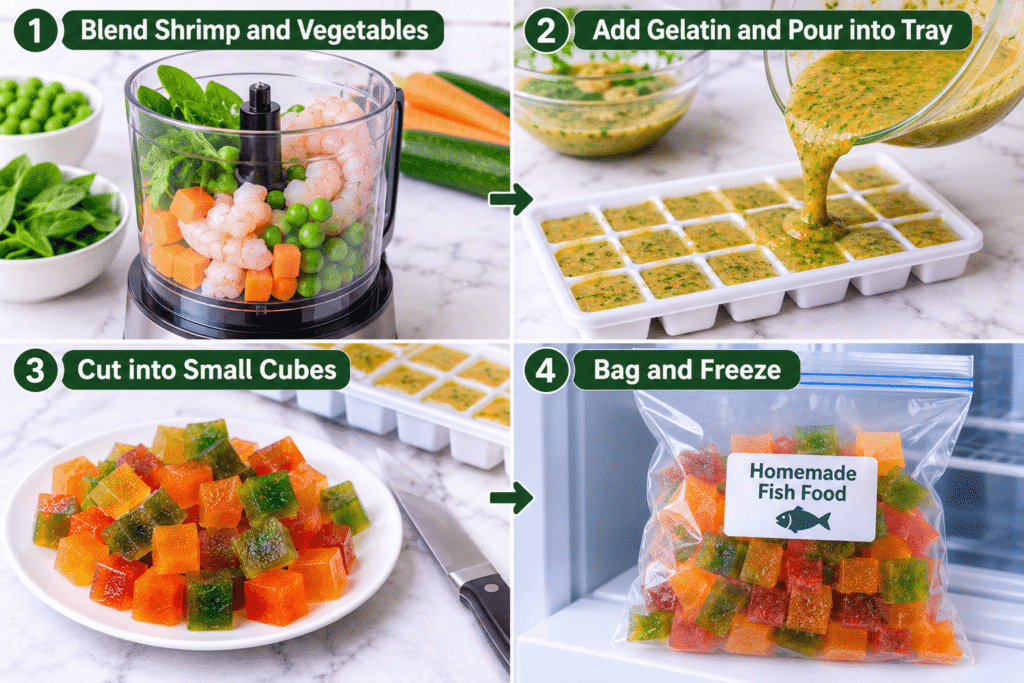
Learning how to make your own food for fish takes about 30 minutes and you don’t need any special kit at all. A blender, a pot and a freezer tray are all you need.
My basic gel food recipe (makes about 2 months of food for a 55-gallon tank):
- Prepare the protein. 100g of shrimp and 100g of white fish fillet. Rinse well and bone/shell as required.
- Blanch the veg. Boil 50g peas, 30g spinach and 30g carrot for 2 minutes. Cool and remove pea skins.
- Just blend everything. Add the protein and the vegetables to the blender with a bit of water and blend until you have a smooth paste.
- Add the binder. Take 2 tbsp of unflavoured gelatin and dissolve it in half a cup of hot water (not boiling). Mix it into the paste.
- Set the mix. Spread the paste out in a thin layer on a tray and put it in the fridge for 2 hours.
Cut into pieces. Slice the set food into small cubes to match the size of the fish’s mouth.Freeze in portions and store the cubes in a labelled freezer bag.
What Is The Easiest Fish Food To Make At Home?
The easiest fish food to make at home is shrimp and pea mash. It uses just two ingredients and no cooking knowledge. Just blanch the peas, peel them and then mash them with some peeled shrimp. Use a small amount.
This is what I made for my first ever batch. My neon tetras and guppies ate it straight away!
How To Make A Variety Of Fish Foods At Home
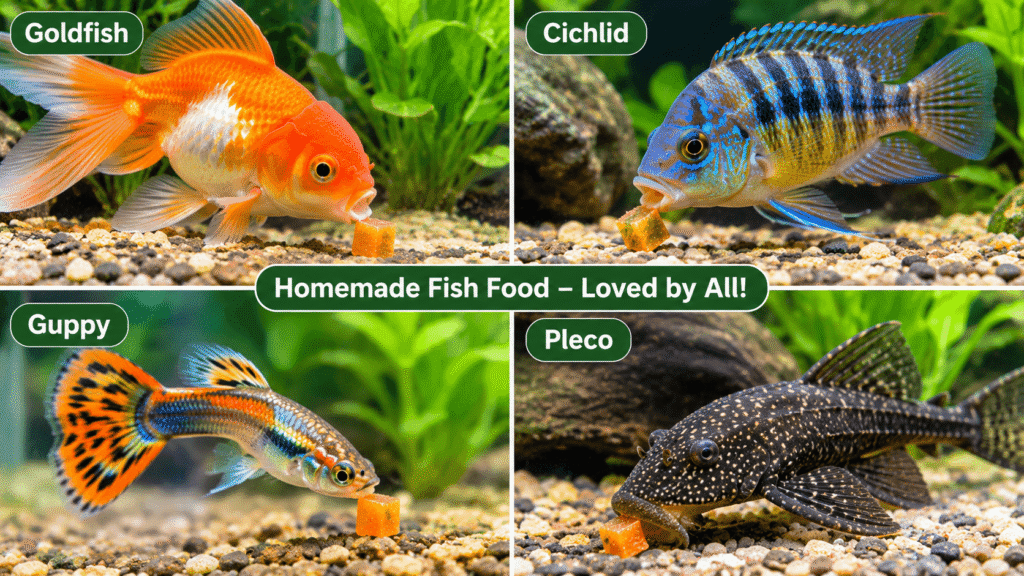
Depending on the type of fish you have you’ll need to change the ratios. For my tanks I do the following:
- Goldfish & Koi – More veg (around 60%), peas & zucchini, with a bit of shrimp.
- Cichlids – 60% protein, fish fillet & shrimp, with some spinach.
- Tetras, Guppies & Mollies – Finely blended fish & spinach, cut up into very small pieces.
- Plecos & Bottom Feeders – Slices of zucchini & blended peas. Put these in near their hides.
- Bettas – Shrimp paste cut into small pieces. They are carnivores!
How much should you feed your homemade fish food?
Feed your fish only as much as they can eat in 2 minutes over the course of one or two feeds. The biggest mistake people make when feeding homemade fish food is overfeeding. This can cause the water to go bad very quickly. Any leftover pieces should be removed after 5 minutes.
I used to overfeed and would get a spike in ammonia levels in under 2 days. Now I feed only small amounts & check my water weekly.
How should you store your homemade fish food?
You should store your homemade fish food in small portions in the freezer to last up to 2-3 months. Once defrosted you should store it in the fridge for up to 2 days. You shouldn’t re-freeze any leftovers as bacteria will grow quickly.
I tend to freeze mine in an ice cube tray. I also label my bags with the date so I know how old they are. Usually 1 cube is 1 feed for my tank.
Is homemade fish food better than shop bought?
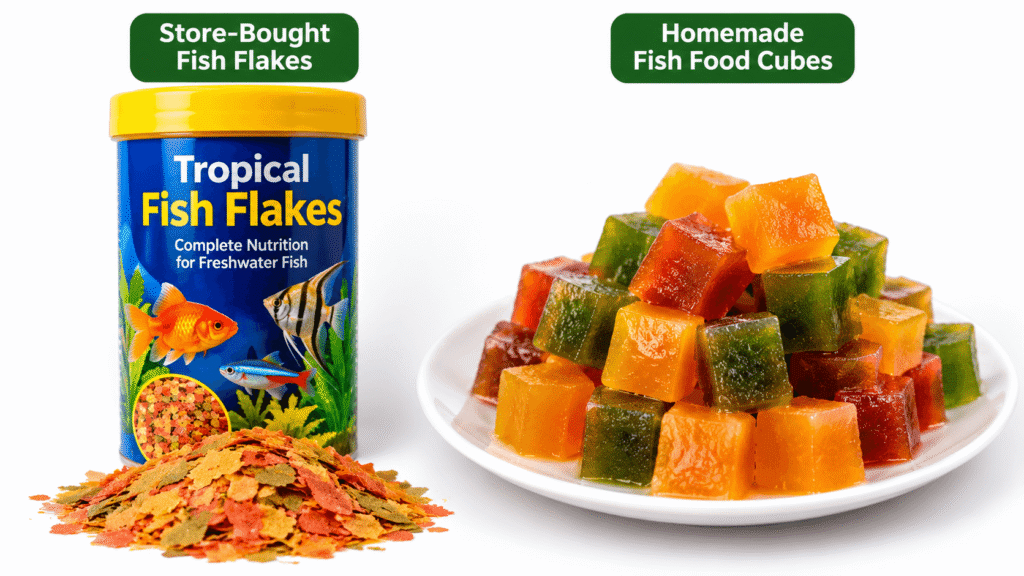
Homemade fish food is much fresher & doesn’t contain fillers but shop bought food is much easier & balanced. I would recommend doing both. I feed my fish gel homemade food 3 times a week & good quality pellets the rest of the time.
Shop bought foods will contain extra vitamins which aren’t easy to replicate at home. Combining both will give your fish the most balanced diet.
What mistakes should you Avoid When Making Homemade fish food?
The most common mistakes are overfeeding, using seasoned ingredients & not storing properly. I made all of these mistakes initially!
Too much protein for herbivores causing digestive issues.
Leftover food in the tank causing dirty water.
Large pieces which the fish can’t swallow.
Not varying the food causing nutritional deficiencies.
Not storing properly causing food to go off.
Can homemade fish food improve your fish health?
Yes! If you vary your fish’s diet they can benefit from good colour, growth & activity. I noticed my goldfish grew quicker & had better digestion when I added blanched peas. Always monitor your fish & change the recipe if you notice any bloating or stringy faeces.
Final Thoughts
Homemade fish food is a cheap, easy & rewarding option once you know the basics. Start off with one easy recipe & feed small amounts. Monitor your fish closely & over time you’ll find the perfect homemade fish food recipe for your tank.
FAQ
1. Can I feed my fish just homemade?
Yes, as long as you are varying the recipe & including protein & veg. Most people will still vary between good quality pellets/flakes.
2. How do I make homemade fish food without gelatin?
Make a paste & feed small pinches. You can use boiled egg yolk as a natural binder but gelatin will hold its shape better.
3. How long does homemade fish food last?
Up to 2-3 months in the freezer. About 2 days in the fridge once defrosted.
4. Is homemade fish food safe for baby fish?
Yes as long as it’s very finely blended. Use egg yolk paste or finely mashed shrimp in very small amounts.
5. What vegetables are best to use?
Peas, spinach, zucchini & carrot are the safest options. Always blanch & chop into small pieces.
6. Why isn’t my fish eating the homemade food?
It can take a few days for new foods. Try adding a tiny pinch of garlic or feeding when they’re hungry.